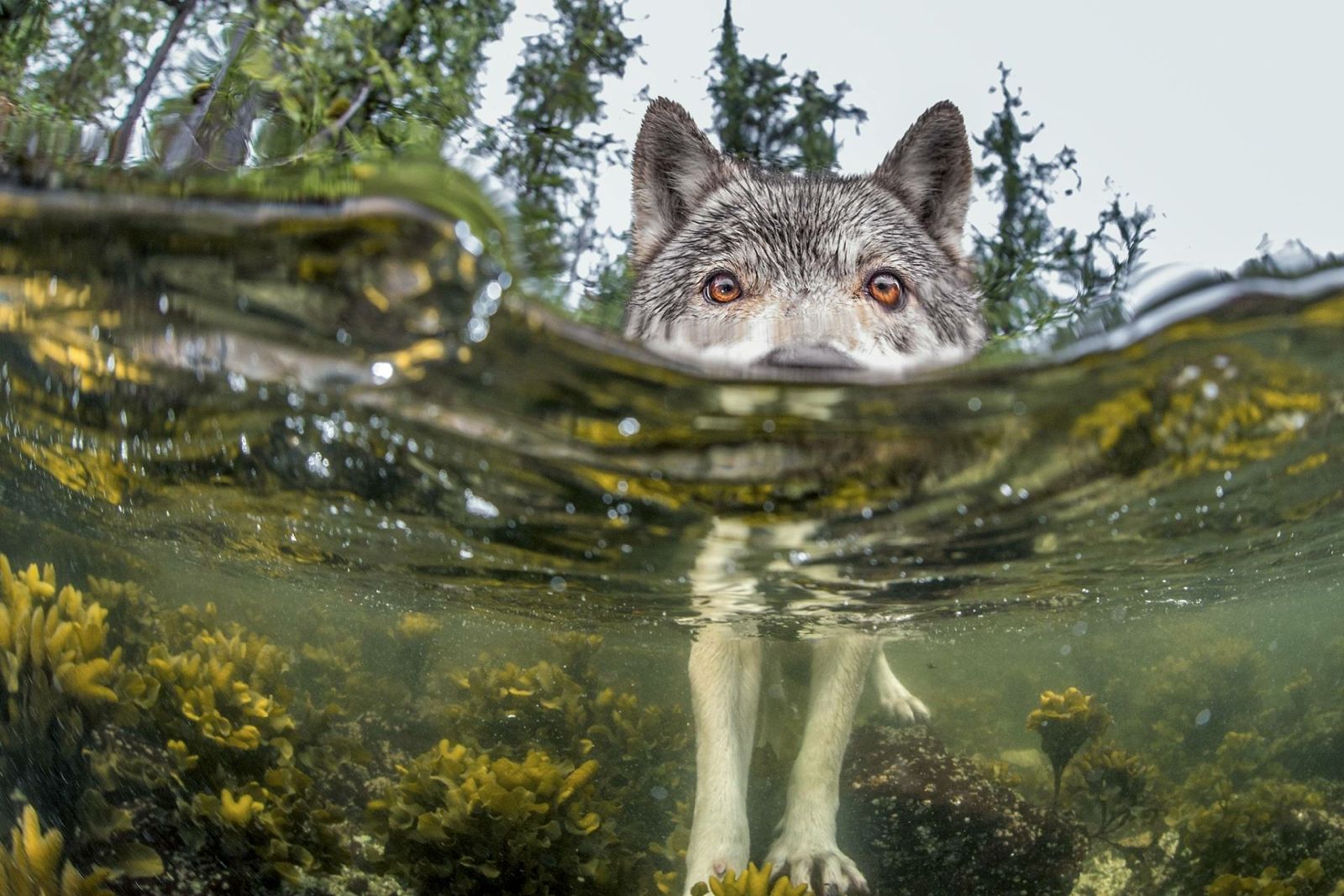
Six million hectares, out of sight.
At 6.4 million hectares, the Great Bear Rainforest holds a quarter of the world's remaining coastal temperate rainforest — and almost nobody would ever see it. Pacific Wild's answer was Great Bear LIVE: a satellite network of remote wilderness cameras and hydrophones offering a non-invasive window into wildlife on a threatened coast.
The network needed a digital home with two jobs: make people fall in love with the place, and give them something to do about the threats it faced.
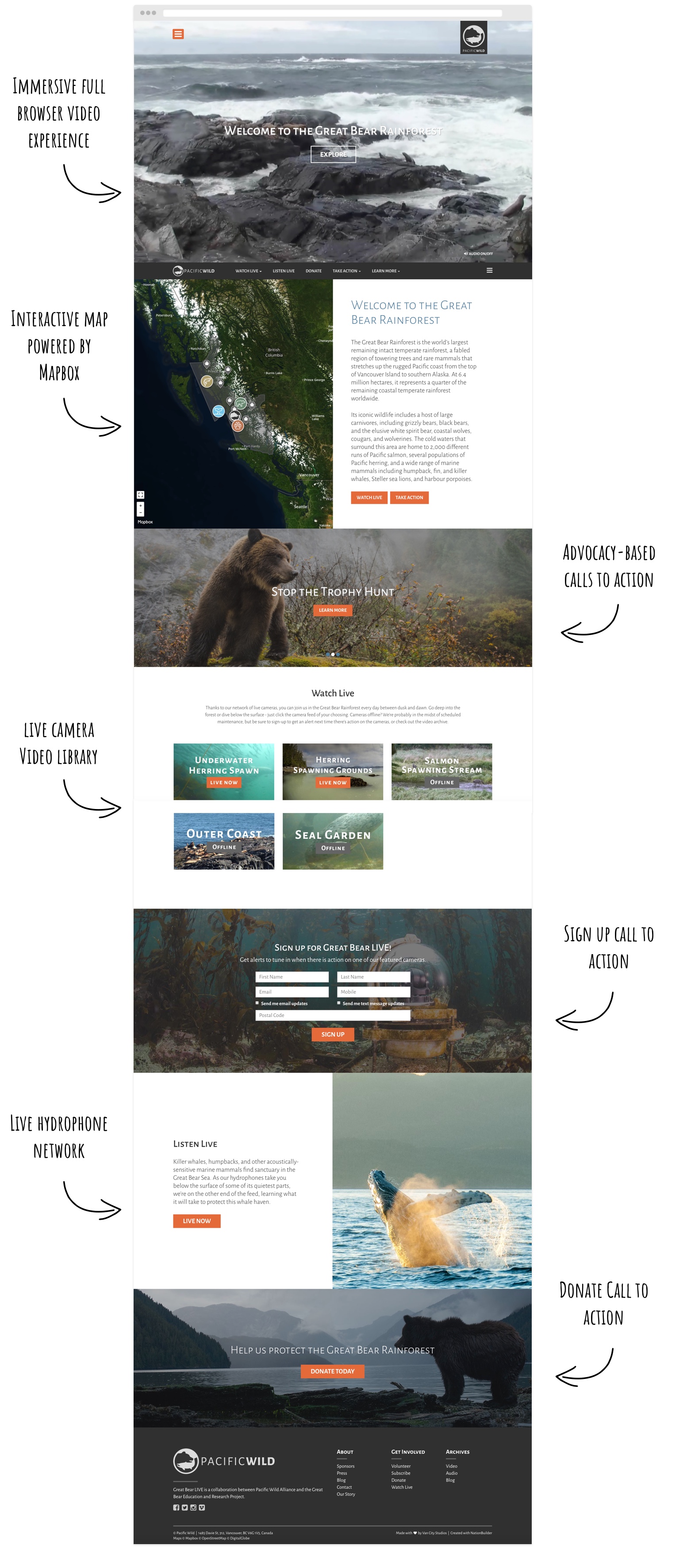
An immersive front door.
The homepage opened on full-screen HTML5 video looped from the live feeds — coastal oceanscapes, protected estuaries, underwater kelp beds — chosen at random, with the real ambient audio of each environment underneath. An interactive MapBox-powered map let visitors explore habitats and points of interest across the rainforest.
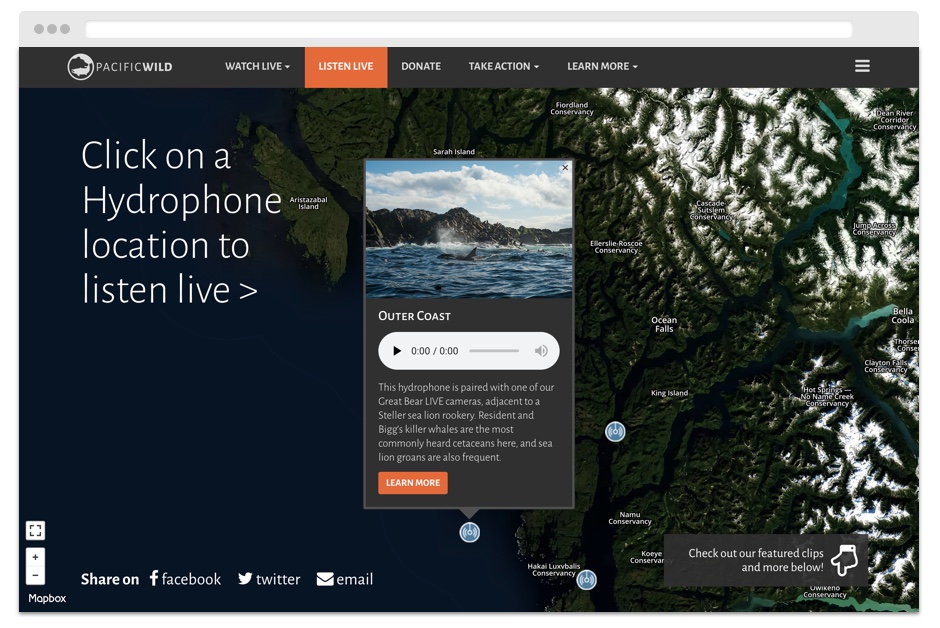
Remote satellite cameras go down — weather, logistics, seasons. So every feed's landing page was designed to stay engaging during outages, automatically surfacing highlight clips, related content, and educational context instead of a dead stream. A dedicated hydrophone section let visitors listen to whale song, live, from the Great Bear Rainforest.
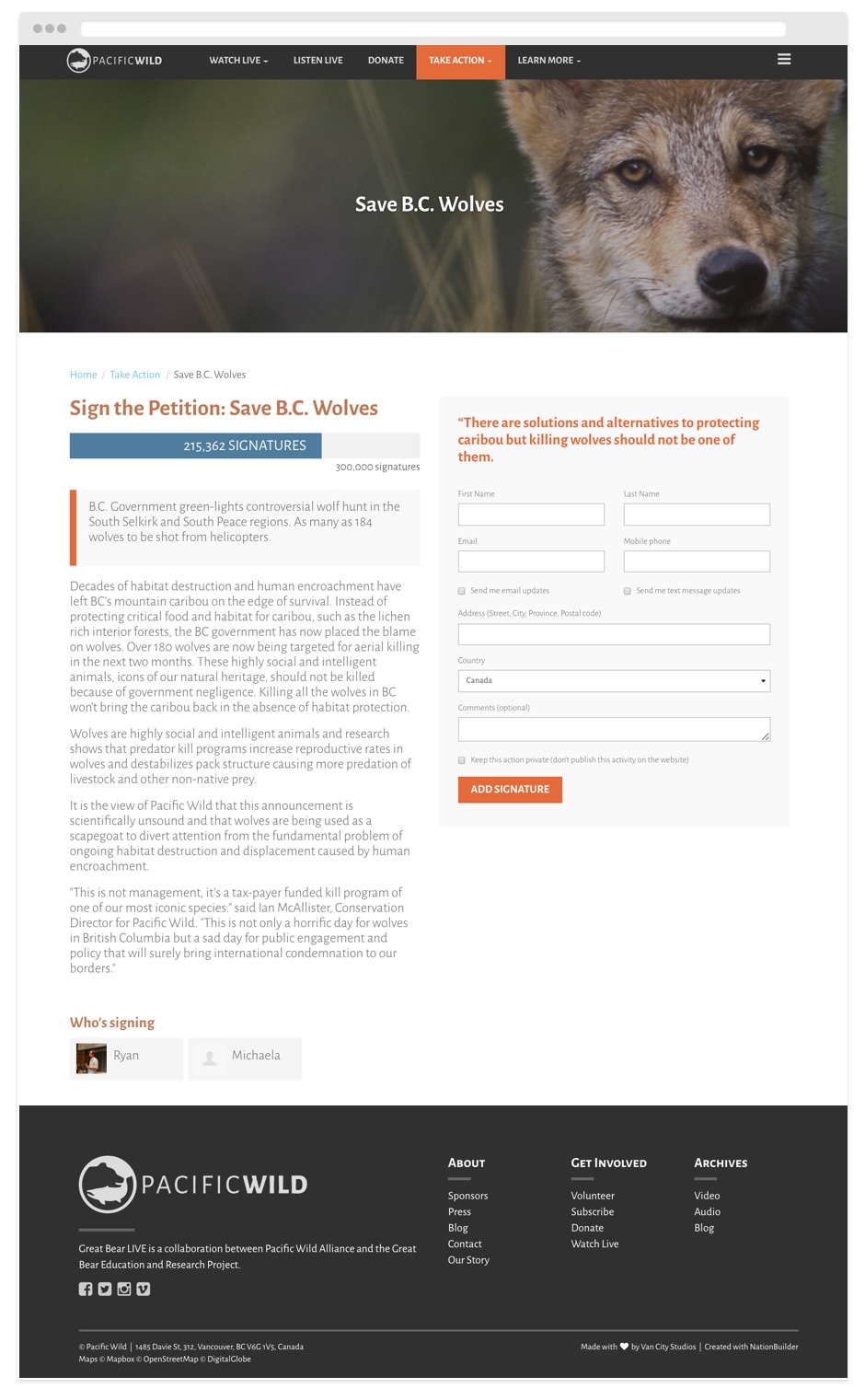
From watching to acting.
Every landing page paired with action pages: custom NationBuilder petitions, pledges, signups, donations, volunteer pages, and templates for sending messages straight to elected officials. The emotional connection the live feeds created always had somewhere to go.
The rainforest won. Repeatedly.
Great Bear LIVE was part of a movement that stacked up real victories: a formal agreement between government, First Nations, environmentalists, and forest companies to protect the Great Bear Rainforest; a 39,458-signature petition before BC banned grizzly trophy hunting; 219,521 signatures against the wolf cull; Canada's $1.5-billion Oceans Protection Plan; and a formal oil-tanker ban for BC's north coast.
The work took home Best Canadian Website at the 2017 Reed Awards. Great Bear LIVE has since been retired — the logistics of satellite-linked wilderness cameras eventually won — but the model it proved, immersion wired directly to action, runs through everything we've built since.